
Tuesday, January 31, 2006

Sunday, January 15, 2006

Falconry in Iraq
Dave, who has a relative serving in Iraq sent me a picture of a falcon from the Mosul area. An Army unit bought this falcon for a local man. He came and gave a demonstration for some of the soldiers. I think it's a Lanner Falcon (Falco biarmicus) but its hard to tell from the angle. The other possibility with those breast markings is a Saker Falcon (Falco cherrug). Let me know if you can give a more definitive ID. (Click on the picture to enlarge.)
Falconry is a very popular sport, especially in the Emirates and some of the other gulf states. It is associated with the traditional Arab way of life. According to Arabian tradition the birds would be released into the wild at the end of hunting season. This tradition has been continued for the last 11 years in Pakistan where birds from the Gulf States are released. In modern times people kept the best falcons year after year. In northern Iraq the sport is said to have been practiced for 2000 years. Some studies put the origins of falconry in the remote past. Each winter, wealthy Arabs travel places like Kazhakstan and Pakistan to fly their birds. This year, because of bird flu the hunters are sticking closer to home and hunting in Iran and North Africa. One of the favorite prey is the Houbara Bustard, a bird that is actually bred in the Emirates to try to replentish falling populations.
Many species of Falcons such as the Saker, Perigrine and Gyrfalcon are protected species and a black market has developed. A wealthy hunter may pay incredibe amounts (up to $40,000 dollars) for a bird that might have been trapped in Russia or hatched from eggs taken from the wild. Because of their investment owners spend lots of money taking care of the bird's health. Bahrain and Dubai even have Falcon hospitals.
In the past some falcons in Iraq were captured in the Sinjar Hills in northern Iraq. Many are also caught in China and Pakistan and sent to the Gulf Region. To try to deter the illegal trade the UAE has started a passport program for Falcons to try to track the legitimate birds entering the country. Now with bird flu there is concern that infected birds may come from the affected countries.
Saturday, January 7, 2006
Birds of Iraq: Pelicans
Many people think of Iraq as all desert. While true in parts of the south and Al Anbar province, Iraq is known for its water. The Tigris and Euphrates rivers have historically fed the large marshlands in the southern part of the country near Basra, Nasiriyah and Qurnah, the traditional site of the garden of Eden. Smaller marshes near Fallujah and Ramadi as well as lakes scattered around the country provide excellent habitat for wintering waterbirds.
Three species of Pelican are listed as being recorded in Iraq. Two are regular visitors and 1 is a vagrant.
Pink-backed Pelican - Apparently a rare visitor from its southern breeding grounds in the Red Sea and Africa. Even though this is one of the smallest pelican species it still has a wingspan of 8 feet.
Great White Pelican - A winter visitor to the marshes and lakes of Iraq. A high count of over 1200 birds was recorded at Haur Al Hammar Marsh near Amara in the southern part of Iraq in censuses in the late 1970's.
Dalmatian Pelican - A rare winter visitor to similar areas as the Great White Pelican. The high count at Haur Al Hammar was 81 birds, again in the 1970's.
Many people think of Iraq as all desert. While true in parts of the south and Al Anbar province, Iraq is known for its water. The Tigris and Euphrates rivers have historically fed the large marshlands in the southern part of the country near Basra, Nasiriyah and Qurnah, the traditional site of the garden of Eden. Smaller marshes near Fallujah and Ramadi as well as lakes scattered around the country provide excellent habitat for wintering waterbirds.
Three species of Pelican are listed as being recorded in Iraq. Two are regular visitors and 1 is a vagrant.
Pink-backed Pelican - Apparently a rare visitor from its southern breeding grounds in the Red Sea and Africa. Even though this is one of the smallest pelican species it still has a wingspan of 8 feet.
Great White Pelican - A winter visitor to the marshes and lakes of Iraq. A high count of over 1200 birds was recorded at Haur Al Hammar Marsh near Amara in the southern part of Iraq in censuses in the late 1970's.
Dalmatian Pelican - A rare winter visitor to similar areas as the Great White Pelican. The high count at Haur Al Hammar was 81 birds, again in the 1970's.
Tuesday, January 3, 2006
Alternative Energy Ecuador: 15MW Windfarm for Loja

Vilcabamba, Loja Province, Ecuador
Ecuadorian company Villonaco Wind Power, 80%-owned by Canadian alternative energy generator Protocol Energy, is scheduled to begin construction of a 15MW wind park this month in Ecuador's Loja province, Protocol chairman and CEO Thomas Logan told BNamericas.
Villonaco is 20%-controlled by Loja province-owned generator Enerloja.
Operations are scheduled to commence November-December 2006 on schedule.
So far all funding for the US$26mn project has been provided by Logan and a private placement of up to 1.6 million shares at CDN$0.50/share, which is 50% completed.
Several companies submitted bids to manufacture the wind turbines last May. Villonaco has narrowed the field down to two companies, Spanish wind power firm Gamesa Eólica and German wind power equipment manufacturer Nordex, and should announce its decision this month, Logan said.
The turbine tender does not only pertain to this venture but also to two additional investment phases in the country, the second of which is a 30-65MW wind farm in the feasibility stage, with construction scheduled for the first half of 2007. The third investment phase is a 25-40MW expansion of the Villanoco wind farm.
The second level of Protocol's strategy is to launch a wind project in Peru and/or Chile, with internal studies indicating that execution of a 125-150MW program would be appropriate in Chile for 2007.
"Along the Andes in Ecuador, Peru, and Region I and II in Chile you're dealing with a wind regime that blows, in the case of Ecuador, with a median speed of 12.5m/s, so about 80% better than the best wind in Canada. But more importantly, it blows at that level for 13 hours/day," Logan said, adding that the turbines will continue turning 24 hours a day.
The company aims to sell power to mining companies "simply because miners are energy hogs. The average mine has operating costs that are 20% energy-related. They all have the same requirements, which is a stable and guaranteed source of energy at a reasonable price, and wind does that," Logan said.
Within four years Protocol aims to generate 400-500MW of wind, geothermal, biomass and run-of-the-river hydro power through its global endeavors, which have an initial focus in Latin America.
Original BN Americas Article
Alternative Energy Ecuador: 15MW Windfarm for Loja
Vilcabamba, Loja Province, Ecuador
Ecuadorian company Villonaco Wind Power, 80%-owned by Canadian alternative energy generator Protocol Energy, is scheduled to begin construction of a 15MW wind park this month in Ecuador's Loja province, Protocol chairman and CEO Thomas Logan told BNamericas.
Villonaco is 20%-controlled by Loja province-owned generator Enerloja.
Operations are scheduled to commence November-December 2006 on schedule.
So far all funding for the US$26mn project has been provided by Logan and a private placement of up to 1.6 million shares at CDN$0.50/share, which is 50% completed.
Several companies submitted bids to manufacture the wind turbines last May. Villonaco has narrowed the field down to two companies, Spanish wind power firm Gamesa Eólica and German wind power equipment manufacturer Nordex, and should announce its decision this month, Logan said.
The turbine tender does not only pertain to this venture but also to two additional investment phases in the country, the second of which is a 30-65MW wind farm in the feasibility stage, with construction scheduled for the first half of 2007. The third investment phase is a 25-40MW expansion of the Villanoco wind farm.
The second level of Protocol's strategy is to launch a wind project in Peru and/or Chile, with internal studies indicating that execution of a 125-150MW program would be appropriate in Chile for 2007.
"Along the Andes in Ecuador, Peru, and Region I and II in Chile you're dealing with a wind regime that blows, in the case of Ecuador, with a median speed of 12.5m/s, so about 80% better than the best wind in Canada. But more importantly, it blows at that level for 13 hours/day," Logan said, adding that the turbines will continue turning 24 hours a day.
The company aims to sell power to mining companies "simply because miners are energy hogs. The average mine has operating costs that are 20% energy-related. They all have the same requirements, which is a stable and guaranteed source of energy at a reasonable price, and wind does that," Logan said.
Within four years Protocol aims to generate 400-500MW of wind, geothermal, biomass and run-of-the-river hydro power through its global endeavors, which have an initial focus in Latin America.
Original BN Americas Article
Sunday, January 1, 2006
China to Spend Billions on Alternative Energy

China is to spend billions on alternative energy and many times more on oil and coal.
Tim Johnson of Knight Ridder reports that barely a dozen years ago the country didn't need deep-sea oil ports, massive tank farms and a brawny foreign policy to procure oil in far-flung spots.
Today, China is an oil-guzzling dragon with a voracious thirst, much like the United States. Supertankers stretching three football fields in length now wait to enter China's deep-sea ports.
The busiest oil terminal is at Ningbo on the East China Sea. Shipping records show that in November, supertankers arrived there from Saudi Arabia, Oman, Iran, Yemen, Equatorial Guinea, Angola and Congo to feed a craving that's helped drive up crude oil prices, rattle global politics and put China and the United States at odds in some of the world's most unstable regions.
China's thirst for oil has emboldened Iran and complicated the refugee crisis in Sudan. With its economy growing at a 9 percent annual rate, China is also courting many of America's oil suppliers, including Canada and Venezuela.
Increasingly, the United States and China are throwing elbows as global rivals for energy. The tussle could get more aggressive if the two nations can't manage to co-exist in the global energy contest.
"We've got to start those discussions before the race for oil becomes as hot and dangerous as the nuclear arms race between the U.S. and the Soviet Union," Sen. Joseph Lieberman, D-Conn., said in a Nov. 30 speech to the Council on Foreign Relations. "If we let it go, this could end up in real military conflict, not just economic conflict." It is interesting to note that this "race for oil" is framed as a zero sum game in which one country wins and another loses. An alternative would be international cooperation to maximise energy efficiency, minimise pollution and radically increase renewable energy.
Compared with the United States, which consumes 25 percent of the world's annual oil output, China burns only 6 percent of the world's production. Yet its energy use is rising steeply.
China exported more oil than it imported until 1993, when imports began to surge. This year, it's importing 3.4 million barrels a day, and some estimates say that within a decade it'll need 7 million barrels a day. Within two decades, demand could reach 12 million barrels a day, which would equal U.S. imports today. China's oil thirst since 2000 has accounted for 40 percent of the global demand growth for crude oil.
Senior Chinese officials grow testy at the suggestion that China's rising needs are roiling oil markets, saying the nation is following a natural path to prosperity.
"Some people complain that China is driving up oil prices. They think the reason lies in China's high consumption of oil," said Zhang Guobao, the vice-chairman of the National Development and Reform Commission. But Zhang said that China's per capita energy consumption is one-sixth of developed countries and deserves to rise.
"Chinese people want to live a prosperous life. So the world should respect China's right to development," Zhang said. In other words Zhang is saying the Chinese have a right to an energy rich lifestyle, sound familiar?
China still wastes energy, leaving huge potential savings from efficiency. To generate $1 million in economic output, China needs eight times more oil -- or its energy equivalent -- than Japan does. Chinese officials claim a turnabout in efficiency is under way. Last summer, China made fuel standards for cars more stringent than those in the United States, and a campaign is afoot to ramp up reliance on renewable energy. The United States and other western nations have an opportunity to help China to become as energy efficient as possible as fast as possible rather than trying to sell Chinese consumers gas guzzling SUVs.
Some experts suggest long-term projections on China's energy needs may be premature because the nation is capable of rapid adaptation and change, and of greater reliance on its vast coal reserves.
Some 68 percent of China's power comes from coal, and the nation is building electric power plants at a rate never seen before on Earth, fueling them from unsafe shafts where thousands of miners are killed each year.
China built power plants this year generating 68 gigawatts of electricity and plans 80 more gigawatts of capacity in 2006, equal to the entire capacity of Britain.
"It took the U.K. 110 years to build those 80 gigawatts," said James M. Brock, an expert who advises the Beijing office of Cambridge Energy Research Associates, a U.S. consultancy.
Nonetheless, China is seeking oil security differently than other countries in East Asia. It has sent its three major state-owned oil companies to scour the globe and invest in foreign oil companies and oil fields. China, a relative newcomer to capitalism, allegedly deeply mistrusts the global oil markets, viewing them as distastefully volatile.
Some analysts believe China's strategy has led it to bid heavily -- and even to overpay -- for some assets. It's adapted a very 19th century approach to energy security, where you seek an almost mercantilist lock-up of energy sources," said John J. Hamre, the president of the Center for Strategic and International Studies, a Washington public policy organization.
China has some reason to be nervous. While imported oil makes up only about 12 percent of China's total energy needs, its energy lifelines increasingly lead to the volatile Middle East. Some 60 percent of China's oil imports come from the Persian Gulf region. Supertankers carrying the oil must pass through the pirate-infested Malacca Straits off Malaysia, where China's oil is protected by the U.S. Navy. China is beefing up its own navy, but it still can't protect faraway sea-lanes. To diversify its suppliers, China has gone oil shopping in Central Asia, West Africa and even in South and North America.
Sometimes, Chinese oil companies simply bid high, as CNOOC, one of the national oil companies, did last summer when it offered $18.5 billion for the California oil company Unocal, a deal that was derailed by Capitol Hill critics who suggested that it threatened U.S. national security.
At other times, Chinese diplomats trail the state oil companies, sweetening investment bids with offers of few-strings-attached aid packages, hands-off political support and weapons.
"Everywhere the Chinese go in the developing world, they go with a lot of development money" said Gal Luft, a Washington-based analyst and the executive director of the Institute for the Analysis of Global Security, a non-profit organization that focuses on the relationship between energy needs and the economy and national security.
China has offered large amounts of development aid in Africa, where it gets 28 percent of its imported crude and plays an increasingly important diplomatic role.
Last year, China gave Angola, its second-largest oil supplier after Saudi Arabia, a $2 billion oil-backed loan to help repair its war-ravaged national infrastructure.
China has courted oil-rich nations such as Sudan, Venezuela and Iran that are officially out of favour with Washington, even dangling the possibility of using its United Nations Security Council veto to protect them against sanctions.
China last year repeatedly blocked U.N. attempts to punish Sudan for failing to stop atrocities in its Darfur region. China owns a 40 percent stake in the major oil consortium drilling in Sudan, and it buys half of Sudan's crude exports.
Eyeing Nigeria's oil fields, China has offered Lagos some $7 billion in investments and said it may sell the country fighter jets too.
Iran which won pledges from China last year for $70 billion worth of oil and natural gas deals, also enjoys vital support from Beijing. Iran now appears confident that it can resist pressure from the European Union and the United States over its nuclear program, certain that China will veto any attempt to impose U.N. sanctions.
Reuters resports that a Chinese state-owned energy firm plans to invest at least $2.48 billion over the next five years in biomass, garbage treatment and other alternative energy projects.
China Energy Conservation Investment Corp. made the plans to take advantage of a new law promoting renewable energy, which sets tariffs in favor of non-fossil energy such as wind, water and solar power and is due to take effect in January.
"We see tremendous business opportunities from the new law," the China Daily quoted Wang Yi, a senior company official, as saying. Coal provides some 70 percent of electricity in China, the world's second-largest energy consumer and producer of greenhouse gases. The state-owned company has started building two wind farms and a new facility that would harness steam generated from garbage and sewage treatment to produce power, the newspaper said.
The firm had budgeted about $1.1 billion to build the garbage-powered plant underway in eastern China and 10 others like it in other parts of the country over the next five years, Wang said.
Another $1.1 billion would go toward constructing up to 30 biomass energy projects in major agricultural provinces, which use organic or woody material such as straw to make fuel or generate power.
China has set a goal of getting 15 percent of its energy from renewable sources by 2020, though it has acknowledged that coal will remain its primary source of electricity for decades to come.
Comment
Within the overall context China's $2.48 billion investment in alternative energy seems insignificant. China is spending huge sums expanding dirty coal fired electricity production. These new plants are not "clean" coal plants and are certainly not carbon neutral (at least not before 2020). Huge amounts of energy is being wasted in China and this looks set to continue. China has some of the world's worst industrial pollution. It doesn't have to be this way. There is an opportunity for international development and cooperation to help China and the rest of the world avoid some of the worst negative consequences of rapid industrialisation. It won't be cheap and it won't be easy.
Or we can seek to deny the Chinese the energy rich lifestyle that many in the west believe is their birthright.
China - An Energy Timebomb?
Watthead - Is Red China Going Green?
China to Spend Billions on Alternative Energy
China is to spend billions on alternative energy and many times more on oil and coal.
Tim Johnson of Knight Ridder reports that barely a dozen years ago the country didn't need deep-sea oil ports, massive tank farms and a brawny foreign policy to procure oil in far-flung spots.
Today, China is an oil-guzzling dragon with a voracious thirst, much like the United States. Supertankers stretching three football fields in length now wait to enter China's deep-sea ports.
The busiest oil terminal is at Ningbo on the East China Sea. Shipping records show that in November, supertankers arrived there from Saudi Arabia, Oman, Iran, Yemen, Equatorial Guinea, Angola and Congo to feed a craving that's helped drive up crude oil prices, rattle global politics and put China and the United States at odds in some of the world's most unstable regions.
China's thirst for oil has emboldened Iran and complicated the refugee crisis in Sudan. With its economy growing at a 9 percent annual rate, China is also courting many of America's oil suppliers, including Canada and Venezuela.
Increasingly, the United States and China are throwing elbows as global rivals for energy. The tussle could get more aggressive if the two nations can't manage to co-exist in the global energy contest.
"We've got to start those discussions before the race for oil becomes as hot and dangerous as the nuclear arms race between the U.S. and the Soviet Union," Sen. Joseph Lieberman, D-Conn., said in a Nov. 30 speech to the Council on Foreign Relations. "If we let it go, this could end up in real military conflict, not just economic conflict." It is interesting to note that this "race for oil" is framed as a zero sum game in which one country wins and another loses. An alternative would be international cooperation to maximise energy efficiency, minimise pollution and radically increase renewable energy.
Compared with the United States, which consumes 25 percent of the world's annual oil output, China burns only 6 percent of the world's production. Yet its energy use is rising steeply.
China exported more oil than it imported until 1993, when imports began to surge. This year, it's importing 3.4 million barrels a day, and some estimates say that within a decade it'll need 7 million barrels a day. Within two decades, demand could reach 12 million barrels a day, which would equal U.S. imports today. China's oil thirst since 2000 has accounted for 40 percent of the global demand growth for crude oil.
Senior Chinese officials grow testy at the suggestion that China's rising needs are roiling oil markets, saying the nation is following a natural path to prosperity.
"Some people complain that China is driving up oil prices. They think the reason lies in China's high consumption of oil," said Zhang Guobao, the vice-chairman of the National Development and Reform Commission. But Zhang said that China's per capita energy consumption is one-sixth of developed countries and deserves to rise.
"Chinese people want to live a prosperous life. So the world should respect China's right to development," Zhang said. In other words Zhang is saying the Chinese have a right to an energy rich lifestyle, sound familiar?
China still wastes energy, leaving huge potential savings from efficiency. To generate $1 million in economic output, China needs eight times more oil -- or its energy equivalent -- than Japan does. Chinese officials claim a turnabout in efficiency is under way. Last summer, China made fuel standards for cars more stringent than those in the United States, and a campaign is afoot to ramp up reliance on renewable energy. The United States and other western nations have an opportunity to help China to become as energy efficient as possible as fast as possible rather than trying to sell Chinese consumers gas guzzling SUVs.
Some experts suggest long-term projections on China's energy needs may be premature because the nation is capable of rapid adaptation and change, and of greater reliance on its vast coal reserves.
Some 68 percent of China's power comes from coal, and the nation is building electric power plants at a rate never seen before on Earth, fueling them from unsafe shafts where thousands of miners are killed each year.
China built power plants this year generating 68 gigawatts of electricity and plans 80 more gigawatts of capacity in 2006, equal to the entire capacity of Britain.
"It took the U.K. 110 years to build those 80 gigawatts," said James M. Brock, an expert who advises the Beijing office of Cambridge Energy Research Associates, a U.S. consultancy.
Nonetheless, China is seeking oil security differently than other countries in East Asia. It has sent its three major state-owned oil companies to scour the globe and invest in foreign oil companies and oil fields. China, a relative newcomer to capitalism, allegedly deeply mistrusts the global oil markets, viewing them as distastefully volatile.
Some analysts believe China's strategy has led it to bid heavily -- and even to overpay -- for some assets. It's adapted a very 19th century approach to energy security, where you seek an almost mercantilist lock-up of energy sources," said John J. Hamre, the president of the Center for Strategic and International Studies, a Washington public policy organization.
China has some reason to be nervous. While imported oil makes up only about 12 percent of China's total energy needs, its energy lifelines increasingly lead to the volatile Middle East. Some 60 percent of China's oil imports come from the Persian Gulf region. Supertankers carrying the oil must pass through the pirate-infested Malacca Straits off Malaysia, where China's oil is protected by the U.S. Navy. China is beefing up its own navy, but it still can't protect faraway sea-lanes. To diversify its suppliers, China has gone oil shopping in Central Asia, West Africa and even in South and North America.
Sometimes, Chinese oil companies simply bid high, as CNOOC, one of the national oil companies, did last summer when it offered $18.5 billion for the California oil company Unocal, a deal that was derailed by Capitol Hill critics who suggested that it threatened U.S. national security.
At other times, Chinese diplomats trail the state oil companies, sweetening investment bids with offers of few-strings-attached aid packages, hands-off political support and weapons.
"Everywhere the Chinese go in the developing world, they go with a lot of development money" said Gal Luft, a Washington-based analyst and the executive director of the Institute for the Analysis of Global Security, a non-profit organization that focuses on the relationship between energy needs and the economy and national security.
China has offered large amounts of development aid in Africa, where it gets 28 percent of its imported crude and plays an increasingly important diplomatic role.
Last year, China gave Angola, its second-largest oil supplier after Saudi Arabia, a $2 billion oil-backed loan to help repair its war-ravaged national infrastructure.
China has courted oil-rich nations such as Sudan, Venezuela and Iran that are officially out of favour with Washington, even dangling the possibility of using its United Nations Security Council veto to protect them against sanctions.
China last year repeatedly blocked U.N. attempts to punish Sudan for failing to stop atrocities in its Darfur region. China owns a 40 percent stake in the major oil consortium drilling in Sudan, and it buys half of Sudan's crude exports.
Eyeing Nigeria's oil fields, China has offered Lagos some $7 billion in investments and said it may sell the country fighter jets too.
Iran which won pledges from China last year for $70 billion worth of oil and natural gas deals, also enjoys vital support from Beijing. Iran now appears confident that it can resist pressure from the European Union and the United States over its nuclear program, certain that China will veto any attempt to impose U.N. sanctions.
Reuters resports that a Chinese state-owned energy firm plans to invest at least $2.48 billion over the next five years in biomass, garbage treatment and other alternative energy projects.
China Energy Conservation Investment Corp. made the plans to take advantage of a new law promoting renewable energy, which sets tariffs in favor of non-fossil energy such as wind, water and solar power and is due to take effect in January.
"We see tremendous business opportunities from the new law," the China Daily quoted Wang Yi, a senior company official, as saying. Coal provides some 70 percent of electricity in China, the world's second-largest energy consumer and producer of greenhouse gases. The state-owned company has started building two wind farms and a new facility that would harness steam generated from garbage and sewage treatment to produce power, the newspaper said.
The firm had budgeted about $1.1 billion to build the garbage-powered plant underway in eastern China and 10 others like it in other parts of the country over the next five years, Wang said.
Another $1.1 billion would go toward constructing up to 30 biomass energy projects in major agricultural provinces, which use organic or woody material such as straw to make fuel or generate power.
China has set a goal of getting 15 percent of its energy from renewable sources by 2020, though it has acknowledged that coal will remain its primary source of electricity for decades to come.
Comment
Within the overall context China's $2.48 billion investment in alternative energy seems insignificant. China is spending huge sums expanding dirty coal fired electricity production. These new plants are not "clean" coal plants and are certainly not carbon neutral (at least not before 2020). Huge amounts of energy is being wasted in China and this looks set to continue. China has some of the world's worst industrial pollution. It doesn't have to be this way. There is an opportunity for international development and cooperation to help China and the rest of the world avoid some of the worst negative consequences of rapid industrialisation. It won't be cheap and it won't be easy.
Or we can seek to deny the Chinese the energy rich lifestyle that many in the west believe is their birthright.
China - An Energy Timebomb?
Watthead - Is Red China Going Green?
Saturday, December 31, 2005
Top Ten UK Alternative Energy Projects

Solar Powered CIS Tower in Manchester
The UK’s top ten alternative energy projects have been named by the UK government’s Department of Trade and Industry (DTI). They include offshore turbines in Kent, the solar-powered CIS tower in Manchester and a wave buoy in Cornwall.
A target of supplying 10% of the UK's electricity from renewable energy by 2010 has been set by the British government.
The list includes three wind farms, three solar-power projects, and two examples of microgeneration, or projects with lower outputs.
According to the government, the 30-turbine Kentish Flats wind farm has been described as "the Ferrari of the turbine world".
Black Law A in South Lanarkshire was one of the largest wind farms approved in the UK, and the Cefn Croes project near Aberystwyth the most powerful when it opened in June.
The CIS tower in Manchester - the city's tallest building - was on course to be the biggest user of solar panels in the UK.
The biomass plant in Enniskillen, Northern Ireland, was singled out for producing a "revolutionary new wood pellet bio fuel", created by burning sawdust and woodchips.
The wave buoy project off the north Cornwall coast was highlighted as a project that would "speed up the installation of one of the world's first wave farms". The site is being investigated as a possible wave hub location - an offshore electrical socket that would be connected to the national grid.
Cornwall Wave Buoy
“Revolutionary” Northern Ireland Biomass Plant
Top Ten UK Alternative Energy Projects
Solar Powered CIS Tower in Manchester
The UK’s top ten alternative energy projects have been named by the UK government’s Department of Trade and Industry (DTI). They include offshore turbines in Kent, the solar-powered CIS tower in Manchester and a wave buoy in Cornwall.
A target of supplying 10% of the UK's electricity from renewable energy by 2010 has been set by the British government.
The list includes three wind farms, three solar-power projects, and two examples of microgeneration, or projects with lower outputs.
According to the government, the 30-turbine Kentish Flats wind farm has been described as "the Ferrari of the turbine world".
Black Law A in South Lanarkshire was one of the largest wind farms approved in the UK, and the Cefn Croes project near Aberystwyth the most powerful when it opened in June.
The CIS tower in Manchester - the city's tallest building - was on course to be the biggest user of solar panels in the UK.
The biomass plant in Enniskillen, Northern Ireland, was singled out for producing a "revolutionary new wood pellet bio fuel", created by burning sawdust and woodchips.
The wave buoy project off the north Cornwall coast was highlighted as a project that would "speed up the installation of one of the world's first wave farms". The site is being investigated as a possible wave hub location - an offshore electrical socket that would be connected to the national grid.
Cornwall Wave Buoy
“Revolutionary” Northern Ireland Biomass Plant


Thursday, December 29, 2005

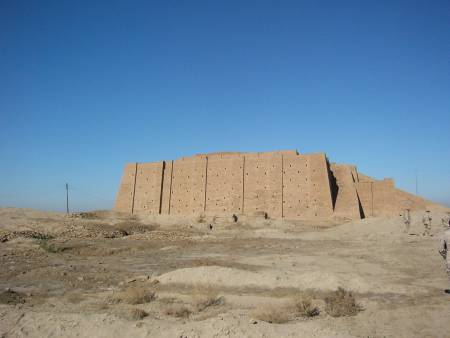 Pond at Tallil Airbase (Ali Base) December 2004. The Ziggurat of Ur is in the distance. I watched a pair of Pied Kingfishers, a Kentish (Snowy) Plover, a Grey Heron and a fine Male Black Redstart here. The city of Ur was the traditional home of the prophet Abraham.
Though this blog is focused on Iraqi wildlife I will make a little detour on this entry.
A reader soon to deploy to Afghanistan asked a few questions that I'll try to answer here.
The first is: what resources are there on Afghan birds? I've only found a few references since Afghanistan has been somewhat neglected since the 1979 Russian invasion. A few old British texts describe the wildlife of the region. Birdlife international has a review of the birdlife of Afghanistan which has a mix of palearctic and oriental species and 460 recorded species. There is one Afghan endemic, Afghan Snowfinch (Montifringila theresae). Happily we have one recent trip report of 82 species made by Anssi Kullberg combining the observation of 4 trips through Afghanistan in 2002. Some spectacular birds are to be seen. A birder from Iraq would recognise many of the familiar favorites: Magpies, Hoopoes, Crested Larks, Pied Kingfishers, Indian and European Roller plus many others. They would also be treated to birds of Indian origin like Brahminy Starling, Black Drongo and House Crow. Some truly exotic birds like the Himalayan Monal, a colorful and rare pheasant, are also on the Afghan list. A somewhat pricey two volume guide has been published this year by Lynx in Spain. The Birds of South Asia is the first guide to fully cover the birds of Afghanistan and at slightly less than $100 US is a good investment for someone spending a long time in Afghanistan.
Another question involved digiscoping and blogging from a forward deployed area. Others may want to add their 2 cents here. I did not have a great camera for birds, nor a scope. If I had to do it again I would try to bring both. I missed a lot of birds because they were out of binocular range.
I found that blogging anonymously is the way to go. It simplifies things considerably and makes the command much more comfortable with your blogging in general. My self imposed rules were very strict because of my role in battalion intelligence. I never revealed my name, my unit or my location in the country. We had many incidents that I never wrote about on my other blog because a relatively smart person could identify my location from the incident and perhaps use it for battle damage assessment. When it came to my wildlife watching, any and all my writing was seen as universally innocuous and not an operational security issue.
I've started posting again on HomeRange, my general natural history blog. It started out as my nature observations but I let it slide in back in May. I recently changed the focus to whatever I feel like writing about, from my observations to interesting news items.
Australia: Alternative Energy Grants

Geothermal Plant
From geothermal power to better batteries, millions have been spent on alternative energy research grants in Australia, according to Rod Myer writing for The Age of Australia.
The AUD $23 million (approximately $17 million) spent by the Australian Federal Government under the first tranche of its $100 million (US $73m) pledge to aid the alternative energy sector has highlighted innovations by local companies to cure Australia's fossil fuel addiction.
Two companies awarded grants under the Renewable Energy Development Initiative (REDI) have developed a no-emissions alternative for base-load generation. Geodynamics received $5 million grant to help develop its geothermal electricity plant near Innamincka in the north of South Australia. Scope Energy, another betting its future on geothermal energy, received $3.9 million grant to aid development. Its principal, Roger Massey-Greene, says the grant will help finance a drilling program of 500-metre deep holes to prove up its resource. Scope plans to open a 50-megawatt plant, but Mr Massey-Greene says he hopes to see this expand to 1000 MW in the longer term.
Scope has a geographic advantage, he believes. Its site is near Millicent, in the south-east of South Australia, meaning it is close to transmission lines and the population centres of Melbourne and Adelaide. "We expect the cost to be very competitive with combined-cycle gas power plants," Mr Massey-Greene said.
Scope's geothermal technology will tap hot water heated deep in the earth and run it through a heat exchanger to generate electricity. Mr Massey-Greene likens this process to a "fridge operating in reverse".
Geodynamics' system will pump water through hot rocks and use the resulting steam to generate power. Scope's wells will be as deep as 4.5 kilometres. The technology that Scope is planning has been in use at a plant in Italy that has operated for 101 years, Mr Massey-Greene said.
Stage one of the plant is expected to cost $4 million per megawatt to construct, compared with about $750,000 for a combined-cycle gas plant. "But we have no fuel costs," Mr Massey-Greene said. Geothermal plants run at an output of about 98 per cent of rated capacity. Mr Massey-Green believes geothermal power has a great future. In New Zealand it provides 7 per cent of power needs and this could rise to as much as 15 per cent. Some in the market believe that Scope will float in the first half of 2006.
Melbourne-based Katrix will use its $811,000 Renewable Energy Development Initiative grant to further develop its new fluid expander that may enable solar energy to be harnessed for electricity. Founder Attilio Demichelli says the expander, which does the job of a turbine, will allow solar thermal energy to be adapted for small-scale use far more cheaply than photovoltaic systems.
Katrix is developing units in which solar energy will heat refrigeration fluid that will run through an expander linked to a generator to produce power. The expander is cheaper than a miniature turbine to build and has a number of advantages, including its ability to take gas or steam at 22 atmospheres (twenty two times atmospheric pressure) back to one atmosphere in one step.
Katrix projects that in the Californian market — once government solar energy grants are factored in — its system will return its cost to consumers in two to three years, compared with 15 years for photovoltaic systems. Mr Demichelli, a private investor, and inventor Yannis Tropalis have invested over $3 million in the technology in three years.
Another REDI grant, of $290,000, has gone to V-Fuel, which is developing a vanadium bromide redox battery. The funding will help develop a prototype of a battery that its promoters hope will be efficient enough to use to store power from renewable energy plants. Efficient storage would enable technologies such as wind power and solar energy to get over a bugbear — unpredictability, because no one knows when the sun will shine or the wind will blow.
V-Fuel principal Michael Kazacos says the grant is crucial to the company, which has raised only $400,000 up to now. V-Fuel has developed a five-kilowatt battery but is aiming to produce a 50-kilowatt prototype. That, he says, will cost $1 million, and further funding is being sought from another federal grant scheme.
"There is a lot of interest in Europe," Mr Kazacos said. "We have had offers of collaboration from there." The battery was 85 per cent efficient, he said, and "we are aiming at having a $200-per-kilowatt production cost". The vanadium bromide process was developed at the University of NSW by Professor Maria Skyllas-Kazacos, who is a principal of V-Fuel.

according to Origin - Sliver Cells are "long, ultra thin, quite flexible & perfectly bifacial"
Origin Energy received a $5 million grant to aid development of its facilities for manufacturing solar energy cells using photovoltaic sliver technology. The technology aims to cut the cost of solar energy cells by reducing silicon usage by up to 90 per cent. Sliver cells are micromachined to less than 70 microns thick with solar cell efficiency running at over 19%. Silicon is the most expensive part of a solar energy cell. Origin Energy says it costs $11,000 to fit a house with a one-kilowatt unit. This would take 20 years or more to pay itself off. However, as energy prices rise and production costs fall, this payback time will be cut. Origin Energy also owns a 19% stake in Geodynamics and offers Green Earth electricity from 100% renewable sources to Australian electricity consumers. For more green energy in Australia see the government Green Power website.
Geothermal Energy: Hot Dry Rock
Article in The Age on Australian Alternative Energy Grants
Australia: Alternative Energy Grants
Geothermal Plant
From geothermal power to better batteries, millions have been spent on alternative energy research grants in Australia, according to Rod Myer writing for The Age of Australia.
The AUD $23 million (approximately $17 million) spent by the Australian Federal Government under the first tranche of its $100 million (US $73m) pledge to aid the alternative energy sector has highlighted innovations by local companies to cure Australia's fossil fuel addiction.
Two companies awarded grants under the Renewable Energy Development Initiative (REDI) have developed a no-emissions alternative for base-load generation. Geodynamics received $5 million grant to help develop its geothermal electricity plant near Innamincka in the north of South Australia. Scope Energy, another betting its future on geothermal energy, received $3.9 million grant to aid development. Its principal, Roger Massey-Greene, says the grant will help finance a drilling program of 500-metre deep holes to prove up its resource. Scope plans to open a 50-megawatt plant, but Mr Massey-Greene says he hopes to see this expand to 1000 MW in the longer term.
Scope has a geographic advantage, he believes. Its site is near Millicent, in the south-east of South Australia, meaning it is close to transmission lines and the population centres of Melbourne and Adelaide. "We expect the cost to be very competitive with combined-cycle gas power plants," Mr Massey-Greene said.
Scope's geothermal technology will tap hot water heated deep in the earth and run it through a heat exchanger to generate electricity. Mr Massey-Greene likens this process to a "fridge operating in reverse".
Geodynamics' system will pump water through hot rocks and use the resulting steam to generate power. Scope's wells will be as deep as 4.5 kilometres. The technology that Scope is planning has been in use at a plant in Italy that has operated for 101 years, Mr Massey-Greene said.
Stage one of the plant is expected to cost $4 million per megawatt to construct, compared with about $750,000 for a combined-cycle gas plant. "But we have no fuel costs," Mr Massey-Greene said. Geothermal plants run at an output of about 98 per cent of rated capacity. Mr Massey-Green believes geothermal power has a great future. In New Zealand it provides 7 per cent of power needs and this could rise to as much as 15 per cent. Some in the market believe that Scope will float in the first half of 2006.
Melbourne-based Katrix will use its $811,000 Renewable Energy Development Initiative grant to further develop its new fluid expander that may enable solar energy to be harnessed for electricity. Founder Attilio Demichelli says the expander, which does the job of a turbine, will allow solar thermal energy to be adapted for small-scale use far more cheaply than photovoltaic systems.
Katrix is developing units in which solar energy will heat refrigeration fluid that will run through an expander linked to a generator to produce power. The expander is cheaper than a miniature turbine to build and has a number of advantages, including its ability to take gas or steam at 22 atmospheres (twenty two times atmospheric pressure) back to one atmosphere in one step.
Katrix projects that in the Californian market — once government solar energy grants are factored in — its system will return its cost to consumers in two to three years, compared with 15 years for photovoltaic systems. Mr Demichelli, a private investor, and inventor Yannis Tropalis have invested over $3 million in the technology in three years.
Another REDI grant, of $290,000, has gone to V-Fuel, which is developing a vanadium bromide redox battery. The funding will help develop a prototype of a battery that its promoters hope will be efficient enough to use to store power from renewable energy plants. Efficient storage would enable technologies such as wind power and solar energy to get over a bugbear — unpredictability, because no one knows when the sun will shine or the wind will blow.
V-Fuel principal Michael Kazacos says the grant is crucial to the company, which has raised only $400,000 up to now. V-Fuel has developed a five-kilowatt battery but is aiming to produce a 50-kilowatt prototype. That, he says, will cost $1 million, and further funding is being sought from another federal grant scheme.
"There is a lot of interest in Europe," Mr Kazacos said. "We have had offers of collaboration from there." The battery was 85 per cent efficient, he said, and "we are aiming at having a $200-per-kilowatt production cost". The vanadium bromide process was developed at the University of NSW by Professor Maria Skyllas-Kazacos, who is a principal of V-Fuel.
according to Origin - Sliver Cells are "long, ultra thin, quite flexible & perfectly bifacial"
Origin Energy received a $5 million grant to aid development of its facilities for manufacturing solar energy cells using photovoltaic sliver technology. The technology aims to cut the cost of solar energy cells by reducing silicon usage by up to 90 per cent. Sliver cells are micromachined to less than 70 microns thick with solar cell efficiency running at over 19%. Silicon is the most expensive part of a solar energy cell. Origin Energy says it costs $11,000 to fit a house with a one-kilowatt unit. This would take 20 years or more to pay itself off. However, as energy prices rise and production costs fall, this payback time will be cut. Origin Energy also owns a 19% stake in Geodynamics and offers Green Earth electricity from 100% renewable sources to Australian electricity consumers. For more green energy in Australia see the government Green Power website.
Geothermal Energy: Hot Dry Rock
Article in The Age on Australian Alternative Energy Grants
Sunday, December 25, 2005
Alternative Energy Hungary: First Windfarm in Hungary

Kaposvar
Austrian company Öko-Energia GmbH is to invest Ft60 billion ($284.6 million) in establishing the first wind farm in Hungary, in the south Rábaköz region, 150km west of Budapest. Forty-eight wind turbines will be built, at a price of between Ft500-800m ($2.37-3.79m) and producing 2,000 kilowatts per hour.
Although the company has yet to sign any agreements with the landowners, according to Lajos Takács, the mayor of Dénesfa, this won't hinder the project. "I am sure the company will be able to come to an agreement with the property owners," Takács said.
Budapest Sun Article on Hungary's First Windfarm
Alternative Energy Hungary: First Windfarm in Hungary
Kaposvar
Austrian company Öko-Energia GmbH is to invest Ft60 billion ($284.6 million) in establishing the first wind farm in Hungary, in the south Rábaköz region, 150km west of Budapest. Forty-eight wind turbines will be built, at a price of between Ft500-800m ($2.37-3.79m) and producing 2,000 kilowatts per hour.
Although the company has yet to sign any agreements with the landowners, according to Lajos Takács, the mayor of Dénesfa, this won't hinder the project. "I am sure the company will be able to come to an agreement with the property owners," Takács said.
Budapest Sun Article on Hungary's First Windfarm
Saturday, December 24, 2005
Alternative Energy in Central America

Managua, Nicaragua
Cancún, Mexico - With the signing of an energy partnership with Mexico, Central America is poised to see a steady supply of oil and natural gas from its northern neighbor.
Mexico's focus on hydrocarbons was clear in the plan, drafted by Mexican officials, which ranked development of alternative energy as only the seventh out of eight priorities for the region.
"Petroleum is an addiction; it's like a drug," Costa Rican President Abel Pacheco retorted during the meeting. "We have to understand that it's not going to be available forever."
Costa Rica has led the region in alternative energy, with 90 percent of its electricity from hydroelectric, geothermal and wind-powered generators, according to Carlos Manuel Rodriguez, Costa Rica's energy and environment minister.
Nicaragua and El Salvador have also been investing in alternative energy projects. El Salvador gets 50 percent of its energy from renewable energy sources, according to Ismael Sánchez, a professor of energy sciences at the Universidad Centroamericana Jose Simeon Cañas in El Salvador.
Alternative Energy in Central America
Managua, Nicaragua
Cancún, Mexico - With the signing of an energy partnership with Mexico, Central America is poised to see a steady supply of oil and natural gas from its northern neighbor.
Mexico's focus on hydrocarbons was clear in the plan, drafted by Mexican officials, which ranked development of alternative energy as only the seventh out of eight priorities for the region.
"Petroleum is an addiction; it's like a drug," Costa Rican President Abel Pacheco retorted during the meeting. "We have to understand that it's not going to be available forever."
Costa Rica has led the region in alternative energy, with 90 percent of its electricity from hydroelectric, geothermal and wind-powered generators, according to Carlos Manuel Rodriguez, Costa Rica's energy and environment minister.
Nicaragua and El Salvador have also been investing in alternative energy projects. El Salvador gets 50 percent of its energy from renewable energy sources, according to Ismael Sánchez, a professor of energy sciences at the Universidad Centroamericana Jose Simeon Cañas in El Salvador.
Wednesday, December 21, 2005
Michael Yon, one of my favorite bloggers in Iraq, has a contemplative post with lots of bird pictures he's taken in the last year. These include White-cheeked Bulbuls, Mesopotamian Crow and Spur-winged and White-tailed Plovers. I'm always pleased when I find someone, especially a soldier or former soldier in Michael's case, is interested in birds. It is an indicator to me of a person who can get outside of their immediate personal concerns. I guess it reminds me of the archetypal gentleman soldiers, renaissance men like the some of the British soldiers in the Mesopotamian campaign who compiled their observations of birds, mammals, plants and archeology into reports published by the Bombay Natural History Society. Or General Sir Alan Brooke, Chief of the Imperial General staff, enjoying a short walk watching goldfinch and stonechats on the eve of the Normandy invasion. I'm not sure if its coincidence or not but many of these multidimensional characters that I've met have been Marines. I'm not sure if there is something about the Marines that draws the soldier-scholar. Several I have met have been incredible students of history and culture and impressive intellectuals.
On another note I bought a copy of A Systematic List of the Vertebrates of Iraq by Mahdi and Georg (1969). There are 385 species of birds listed. Its a start to a comprehensive Iraq list. Avibase lists 416 species. It will probably be a few years before there is an Iraq Rare Records Committee and an official Iraq list.
On another note I bought a copy of A Systematic List of the Vertebrates of Iraq by Mahdi and Georg (1969). There are 385 species of birds listed. Its a start to a comprehensive Iraq list. Avibase lists 416 species. It will probably be a few years before there is an Iraq Rare Records Committee and an official Iraq list.
Sunday, December 18, 2005


Subscribe to:
Posts (Atom)
