Sunday, January 21, 2007

Onwards to Brussels

Later today I'm taking off for Brussels, preparing for the monthly meeting of the General Affairs and External Relations Council.

GAERC - as is the romantic description of this august body of the 27 foreign ministers of the European Union.

When we sit down in the Justus Lipsus building in Brussels tomorrow it will be to a rather heavy agenda dominated by the Balkans and the Middle East, but certainly dealing also with Somalia and Sudan as well as pre-viewing some of the core issues for the upcoming European summit on energy security and climate change.

From Brussels I'm flying directly tomorrow late afternoon to Riga in Latvia.

I have already been to Tallinn and Vilnius, and had been planning to go to Riga already earlier. It is important to reconnect the network of cooperation in the Nordic and Baltic area, and I certainly look forward to the talks I will have in Riga with the President, the Prime Minister and the Foreign Minister.

Riga is a true metropolis of the Baltic region that is now rapidly regaining its historic role. It's a splendid and truly booming city in a country with a growth record among the most impressive in modern Europe.

After a day in Stockholm on Wednesday I'm off to Paris on Thursday for the big international conference on Lebanon. It will be an impressive gathering also to show support for the position of Prime Minister Siniora, and I'm certain that the discussions in the corridors will be dominated by the broader Middle East issues.

From there I'm continuing to Brussels on Friday where there is a special meeting of the foreign ministers of Nato to discuss primarily the situation in Afghanistan.

We have a keen interest in these discussions since we are among the troop contributors to the ISAF mission there, and I'm looking forward to the lunchean that also includes the EU countries not members of Nato.

The Week That Was

Last week turned out to be even more hectic than I expected - but also more fruitful.

I had a most useful visit to Belgrade and to Southern Serbia. With due respect to diplomatic conversations - it is useful to come out and meet the concerns of people in villages and farms and small towns. And that is what I did with President Tadic on Monday of last week.

What struck me most from these poor areas of Southern Serbia was the fact that every time the word "Europe" was mentioned there was spontaneous applause. You could feel and see and hear the soft power of the European Union during those meetings.

The ideologies of the past no longer appeals, and I believe that noy even the appeals to raw nationalism don't work to the same extent as before. It is dream of Europe that is the dream of a better future for many of the peoples of the Balkans.

It goes without saying that these expectations will be very difficult to meet. European integration can do a lot - but not everything.

But the very fact that these expectations are there is a powerful political fact - if they are ignored or rejected there are bound to be consequences. I would not rule out that such a situation would give the forces of raw nationalism a new life.

But it wasn't only Serbia and the discussions there - centred on what could happen after today's election - that were useful last week.

In Rome - apart from attending a big conference on Balkan policy together with Commissioner Olli Rehn - I had a very fruitful meeting with Foreign Minister D'Alema.

We broke all time schedules as we discussed primarily the Middle and the Balkans, but we also had time for an interesting exchange on developments in Russia. Our political backgrounds are very different, but I believe it is fair to say that we were very much on the same wavelength, and there is a good ground for a closer cooperation between Stockholm and Rome on a number of important subjects.

On Wednesday I was in Helsinki for more traditional informal talks on security policy. It was the foreign and defence ministers of the two countries meeting over a good meal at a manor house on the outskirts of Helsinki.

As usual between our two countries it was an excellent meeting of minds.

In terms of security policy our orientations and ambitions are very similar, with a more relaxed attitude towards practical cooperation with Nato than before, although there are differencies in the ways in which our respective defence forces have so far adjusted and been transformed.

And Thursday I spent - apart from the regular meeting of the government - mostly in the Riksdag debating different issues.

We had a long and excellent discussion on the situation in the Middle East, and it was worth noting that while there are certainly tensions between different interpretations of the basic situation in the area, there was a very broad consensus on the tasks ahead for European and Swedish policy in the area.

In this area, I see my task more as trying to shape the future than in trying to judge the past.

Thursday, January 18, 2007

Blood & Circumstance!


The attacks on Syrian refugees in Iraq are increasing by the day, scores have been killed so far, and dozens have been rendered homeless or under arrest as terrorists. The campaign is being justified by the Maliki government as a crackdown on terrorists, but these refugees have been in Iraq for decades having been driven out from Syria by their ideological and personal differences with the Assads. As such they have no reason whatsoever to collaborate with the Assads to bring about any instability in Iraq. Indeed many of them are organized opposition members. Some are in fact affiliated with the National Salvation Front.

Coming at this particular point in time, following Iraqi president Jalal Talabani’s trip to Syria and his meeting with his Syrian counterpart among other top Syrian officials, and following the conclusion of a bilateral agreement on security between Syrian and Iraqi officials, the current bloody crackdown is prompting many Syrian Iraqis to see a potential connection here, and the outlines of a sinister plot against them. Indeed, are Iraqi security and military officials helping the Syrian regime settle some old scores with Syrian opposition members in Iraq? While it is difficult answer this question with any certainty, the fact that the Assad regime refuses to allow these Syrian refugees back to their motherland at a time when virtually hundreds of thousands of Iraqi refugees are allowed to flood Syrian cities tend to give credence to this perception.

But this situation shouldn’t come as a surprise to anyone. In fact, and regardless of the accuracy of this perception at this stage, arrangements like these, ones that will allow for the silencing of opposition members even beyond Syria’s borders, are indeed the kind of quid pro quos that engagement with the Assads is bound to produce. This is exactly the kind of price that the Assads will demand. An agreement with the Assads will need to be signed in blood, Syrian blood, Iraqi blood, Palestinian blood, Lebanese blood, American blood.

No, this is not meant to exonerate America from its own responsibility with regard to the current bloodletting in Iraq, but it merely seeks to underscore that correcting one bloody policy cannot take place by advancing another. This is what got us into this mess to begin with. The only way forward is to actually proceed forward not roll the clock back to some “magical time” when realist policies turned a blind eye on the various acts of repression and mayhem that regimes, such as the Assad’s, unleashed on their people. This world has grown too small for a policy of willful blindness to go unpunished for long. The world these days seems to allow at least this one certainty.

Tuesday, January 16, 2007

Talking Lions! Walking Snails!


With regard to the current controversy generated by the revelations in Haaretz of secret talks between Israeli and Syrian representatives spread out over a 2-year period between mid 2004 and mid 2006, I would like to make the following points:

* I was indeed aware of the early efforts and contacts made to hold talks between Syrian and Israeli representatives in Madrid. If anything, the year of 2004 was the year for quiet overtures between the two governments, and I had already commented on my always-and-forever independent part in such endeavors earlier. I had nothing to do with this particular initiative, however, and am really surprised that the talks did last for as long as they did and produced an actual “agreement.

* The denial by Syrian officials that such talks did indeed take place, and the reaction of so many people commenting on this news in a variety of Arabic forums and websites, if anything, serve to demonstrate the validity of the arguments I made in my recent article in the Forward, namely: that peace with the Assads at this stage would be tainted, and that the Assads are quite aware of that. For this reason, the Assads will talk the talk, but they will not walk the walk. So, if this leak to the Haaretz was meant to show that the Assads mean business, to me, the reactions to it perfectly illustrate why they can’t.

Sunday, January 14, 2007

From Belgrade to Rome

Late yesterday evening I returned home from an eventful day in Vilnius.

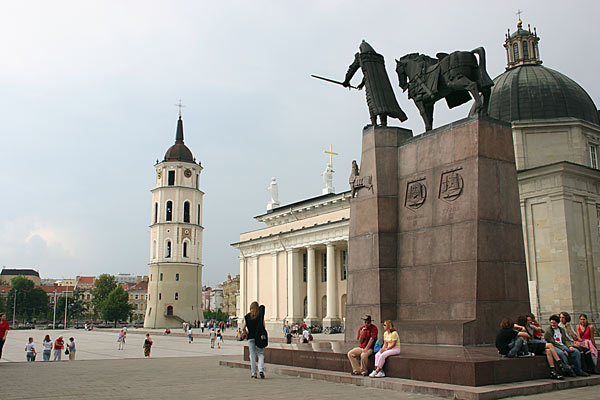
It was Freedom Defenders Day, and apart from the special session in parliament where I was among the speakers we all attended the special commemorative mass in Vilnius Cathedral in the evening. I walked down the aisle of the cathedral filled with people together with Vytautas Landsbergis, who remains the hero of Lithuania's struggle for independence.

But later today I'm off to Belgrade in Serbia for political talks, and tomorrow I'm heading together with the President of Serbia Boris Tadic to Southern Serbia in order to visit different development projects.

Serbia faces important parliamentary elections January 21st, and it is of course of critical importance to demonstrate that there is a European option for the country. The stability of Serbia is a key to the stability of the entire region, and there are significant challenges - Kosovo certainly among them - to be handled in the next few months.

I will have talks - apart from with the President - also with Prime Minister Kostunica and Foreign Minister Draskovic.

From Nis in Southern Serbia I'm flying tomorrow evening to Rome to have dinner with the European Commissioner Olli Rehn who is responsible both for enlargement and Balkan policy.

And on Tuesday both he and I are taking part in a public debate on the future challenges in the Balkans together with, among others, Italian Foreign Minister D'Alema.

We will also discuss the approach we need to take in the coming weeks and months towards these issues. They will be high up on the European agenda during the spring, and my quick trip now is part of the preparations for those policy decisions on the European level.

Saturday, January 13, 2007

Notes from a Conference!


* You can always hold our leaders to their words, for they always speak in good faith, right until they act in bad one.

* In our region, if not the world, everyone holds everyone else by the balls, no one is in the habit of keeping one’s hand to oneself, for we perennially covet what our neighbor has, even when he is not so well-endowed.

* Our national disease is that we are all so poor in spirit.

* I see hope as I see life – as a condemnation, a prison sentence, a necessary evil which I have to endure until release comes, be it in the form of death or insanity.

* We have long reached the point where we have to divest ourselves of all leaders, national and religious, and burn the whole lot of them, and not only in effigy. It is about time that our leaders tasted some of the suffering they have been inflicting upon us.

* Moderation is not an ultimate virtue, and should not be embraced as such. There is no ultimate virtue. We are all too lacking, all too human, to dabble with ultimates. But then, perhaps that’s why we are so obsessed with this kind of dabbling.

* Moderation is not a virtue in itself. Nothing is virtuous in itself.

* Moderation is a means towards an end, if it cannot deliver, it should not be embraced.

* Virtue is always utilitarian even when people think and claim that it isn’t.

* You don’t do the right thing because it is the right thing, you do it because you’re getting something out of it, even if only your peace of mind.

* Moderation is often a veil used by the most self-righteous Machiavellian elements among us to hide the true nature of their designs, not to mention their duplicity and their cowardice.

* Under authoritarianism there is no virtue, and moderation is a crime.

* I may not win my freedom or find the desired justice in the here-and-now, but I should start fighting for them and always push for their fulfillment in the here-and-now, otherwise the fight will never begin, and they will ever be fulfilled.

* Freedom and justice temporarily deferred are freedom and justice forever deferred.

* We will never be ready for democracy unless we begin experimenting with it.

* I shall strive to balance between my choice of means and the nature of my desired ends. But I should still keep my options open, and my enemy guessing.

* Sometimes, when the fire is so big and threatening, you have no choice but to fight it with more fire.

Friday, January 12, 2007

From Madrid to Vilnius

It's been a somewhat hectic week, and I'm sorry I have not been able to post anything since Sunday.

But I have noted the very positive reaction to me being back here - although not in the same way as before.

I spent Wednesday and Thursday in Madrid at a major gathering 15 years after the historic conference on peace in the Middle East. The meeting was supported by the Foreign Ministers of Spain, Norway, Denmark and Sweden and brought together for informal discussions many key decision-shapers from the region.

All in all I flew back from Madrid with a marginally less pessimistic assessment of the situation. Things could easily go very wrong - but there is a slight possibility that we might succeed in turning things around.

In my opening remarks I stressed that time is not necessarily on the side of peace any longer.

There is a risk of not only rising tensions but also the rise of forces that might challenge the very foundations on which peace must be built. So, time is of the essence, and what we need is no longer a peace process - what we need is peace.

Back in Stockholm from Madrid I followed the latest move in the somewhat bizarre efforts to attack my due to the remumeration I received from some of my board positions before becoming Foreign Ministers.

Specifically, it concerned the share options I received as part of the board remumeration from the investment company Vostok Nafta. As appropriate, I sold them as soon as I could, but to some that wasn't enough and they called for all sorts of investigations.

As is usual in this sort of case, there was the usual media frenzy as well. The media hunts in herds.

But earlier today the legal inquiry very solidly rejected all the accusations and attempts to smear me. This was the much stronger as it come from a prosecutor well known for taking the strictest of views on these sorts of issues.

Naturally, this will not stop the political opposition. They have nothing to say about foreign affairs - but smear campaigns they can always mount. I don't think there are too many who will be much impressed by their efforts.

From Stockholm I flew to Vilnius for a very special evening.

Tonight is 16 years since Soviet forces stormed the TV tower in Vilnius in their attempts to smash the forces of freedom and democracy. Thirteen young people lost their lives that night.

I attended the commemorative vigil outside the Parliament building tonight, meet the heroes of those days and was also suddenly invited the address all those that had gathered to remember, to sing the songs and to express their faith in their country.

And tomorrow I will address the special session of Parliament. I will speak about our vision for all of Europe, and the text will be available on the Swedish Ministry for Foreign Affairs web site immediately.

Then I stay here during the day.

I'll see the KGB museum. And I'll see my old friend Emmanual Zingeris to continue discussions on efforts to restore parts of the old ghetto of Vilnius. This was - before the immense tragedy of the Holocaust - the Jerusalem of Eastern Europe, and the contribution that Jews from here have done in many countries has been enormous.

Before flying home I will attend - with the President and the Prime Minister - the special commemorative mass in Vilnius Cathedral.

Monday, January 8, 2007

A Not So Heretical Consensus!


For long time, people who read this blog tended to classify some of my views as reflections of some personal isolated stands, unique only to certain members of the opposition, especially outside of Syria. This, however, is not simply inaccurate, it is downright false.

In reality, Syrian opposition groups, working inside and outside the country, have long adopted certain united stands on many of the issues involved in the struggle for change in Syria. Indeed, ever since the appearance of the Damascus Declaration on the scene and the formation of the National Salvation Front, the political discourse of Syria’s better organized oppositional coalitions has indeed been harmonized. Whether this was done by a careful act of coordination, by an independent assessment of certain realities on the ground, or by a combination of both is something worth wondering about since it might help US officials adopt a better strategy for dealing with Syria in the near future.

Indeed, and by way of connecting certain long-neglected dots, let’s remind here of a certain forgotten sequence of events.

First came the Damascus Declaration, a document authored and adopted by a variety of internal opposition groups and figure, calling for regime change in order to save the country from the adventurist policies of the Assad regime. Then came the formation of the National Salvation Front which subscribed to the Declaration. Third came a conference in Washington D.C. organized by the Syrian National Council, a US-based opposition group. The conference was unique in that it managed to bring several well-known signatories of the Damascus Declaration to take part in it the go back to Syria and communicate with the rest of the signatories. Other notable figures from the Damascus Declaration joined the conference by phone, including Riad Seif (mere days after his release from prison), Walid al-Bunni and Suhair al-Atassy. The fourth step happened a month later when the Syrian National Council threw its lot with former Syrian VP Abdul Halim Khaddam and Muslim Brotherhood leader, Ali Sadreddine al-Bayanouni, and formed the National Salvation Front.

Now, all that is left to connect all these dots in order to form a harmonious sensible whole is to bring to attention the fact that the various points that have been elaborated by me in my recent two articles have just been elaborated again in a new statement (Arabic) recently released by the Damascus Declaration. The statement condemns the regime’s adventurist policies that made the country get stuck in the bottleneck with no way out in sight, they warn against the regime’s pro-Iran policies, and warn against the regime’s false interest in peace with Israel etc.

So, what does this mean? Simple: the views often elaborated here do not reflect the personal views of some adventurist, as some might paint me, but the consensus of some of Syria’s most respected opposition figures and most organized opposition coalitions both inside and outside the country. As such, and as US policymakers continue to wrangle over the best policy course that needs to be adopted vis-à-vis Syria, the views often elaborated here do warrant serious consideration.

Friday, January 5, 2007

Another Lesser White-Fronted Goose tracked from Siberia to Iraq

In 2004 a satellite tagged Lesser White-fronted Goose was tracked from its nesting grounds in Siberia to its wintering grounds in Iraq. For the first time the entire round trip migration of a single bird of this species was documented.

The LWFG is a globally threatened species that has experienced a significant population decline and is assessed to be a moderate to high risk of extinction due to habitat fragmentation and hunting pressures. Almost nothing is known about the population wintering in Iraq. Populations in Azerbaijan and Iran have seen dramatic decreases according to to waterfowl biologists.

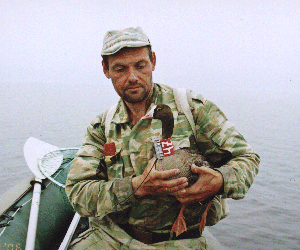
In July of this year in the Putorana Plateau in the Ural Mountains of Russia, another group of this threatened species were tagged with satellite transmitters. The birds were captured by netting them from a boat on open water during the post-breeding moult, when they cannot fly for a number of weeks (see photo above) . Of the six birds, only 2 were still transmitting data as of December 2006.

Both birds had arrived at a reservoir on the Iran/Azerbaijan border near the Azerbaijani city of Nakhichevan in Early November. One bird had made its way to the Euphrates Valley in Syria by early December, just over the Iraq/Syria border. Currently this bird is spending its time in a wetland area about 50 km north of Al Qaim in Al Anbar Province. The bird has been tracked as close as 5 miles from the Iraqi border.

The second bird was still in Azerbaijan on December 25th. On December 29th the bird had moved 650 km south to Maysan province in Iraq very close or in the Birdlife International IBA of Haur Al Sa'adiyah. Much of the area appears to be agricultural land now. Surveys of the area in the 1960's and again in 1979 recorded large numbers of wintering waterfowl and shorebirds including Ruddy Shelduck, Pintail, Gadwall, Wigeon, Shoveler, Teal, Mallard, Greylag Goose and Greater Flamingo. In 1979 up to 2500 Common Cranes were wintering in the area.

On January 5th, 2007 the bird had moved about 60 km northwest to a rich agricultural area approximately 25 km east of the city of Kut in Wasit Province. It would be interesting to find out where this bird is feeding since Wasit Province reported a bumper crop of both Wheat and Barley this year. In some other countries, the government has paid farmers to leave some grain in the field for waterfowl.

This bird is visiting some of the same areas as the bird tracked from Siberia in 2004/2005. The surveys of the southern Marshes of the last several years have demonstrated that these wetlands remain an important wintering area for Eurasian waterfowl.

Against the Executions in Iraq

The execution of Saddam Hussein turned into a horrible spectacle that did not reflect well on the authorities that carried it out.

It would have been far better if one had listened to the European and other voices that had called for his sentence to have been changed to life time imprisonment.

Let's at the least hope that the Iraqi government is now ready to listen to this appeal just issued by the Presidency of the European Union:

The Iraqi Government intends to execute Barzan Ibrahim Al-Tikriti, formerly head of one of the intelligence services, and Awad Hamed Al-Bandar, formerly president of the Revolutionary Court. The Presidency recalls the longstanding position of the EU with regard to the death penalty. The EU opposes capital punishment under all circumstances.

Both, Mr Al-Tikriti and Mr Al-Bandar, were high-ranking representatives of Saddam Hussein?s regime, which had brutally oppressed its own population for decades. Thousands of innocent people were killed and tortured, many disappeared.

Iraqis deserve a better future. To this end, it will be crucial to bring together all parts of Iraqi society irrespective of ethnicity or religious affiliation. Ensuring accountability for the crimes committed during the former regime can assist in furthering national reconciliation and dialogue in Iraq. The Presidency recalls that in order to achieve this important aim the prosecution of those crimes must adhere to the requirements of a fair process.
"

Europe Starting Up

As expected, we had a good aqnd important European meeting on Somalia in Brussels on Wednesday.

After the celebrations marking the entry of Romania and Bulgaria into the Union, this was the first event of the German Presidency during the first part of 2006.

Now, the meeting in Brussels is now followed by a meeting in Nairobi of the wider International Contact Group on Somalia. This is the occasion for more detailed discussions on how a political reconciliation process in the country can be launched.

There are also discussions on some sort of peacekeeping force to be sent to the country. But such a force first requires a peace to be kept. Force can not replace peace - it can support it. First things first.

My day in Brussels also gave opportunities for other discussions in a city that hadn't really come back from the holidays.

And the same still applies to Stockholm, which has given me some breathing space for planning activities at the ministry.

Next week will be different. Europe is starting up again.

On Wednesday I'm off to Madrid for a major conference 15 years after the Madrid conference that started a peace process in the Middle East. Now there will be discussions on the step that must be taken now to achieve not just a process but preferably a peace.

There is little doubt that this will one of the issues at the top of the European foreign policy agenda in the next few months.

By that time we might also know more about where President Bush intends to take his Iraq policy. Will he take up the recommendation from the Iraq Study Group to launch a major diplomatic initiative to revive a Middle East peace process?

Javier Solana is in Washington these days, and he will certainly tell all he is meeting the priority that we Europeans attach to this. This was also the message that Chancellor Merkel brought to the White House when she saw President Bush yesterday.

The conference in Madrid is hosted by the Foreign Ministers of Spain, Norway, Denmark and Sweden - so I'll see my Nordic colleauges there as well. It also brings together a number of individuals and public figures from the region itself in order to take stock of what's been happening during the past 15 years.

After Madrid I'm coming home very briefly to Stockholm - hopefully to see Foreign Minister Peter MacKay of Canada; his schedule is still somewhat uncertain - before proceeding on Friday to Vilnius in Lithuania.

There I'm speaking Saturday at a special session of the Seimes - Parliament - to remember those that died in front of the Soviet tanks 15 years ago in 1991. But it will also be the occasion of a seminar bringing together some of the key thought leaders on the issues of Europe's East.

And from there I'm off to the Balkans - but that's another story for another blog entry.

Monday, January 1, 2007

The Year of Living Farcically!


The year of 2006 has been quite a strange one indeed. But then any year that starts with the defection of a Khaddam, the long time VP of an embattled regime, and ends with the execution of a Saddam, the father of all VIPs of a fallen one, is just bound to be strange I guess.

But no, there is a quality here that goes beyond the strange and the bizarre and right down into the tragicomic, if not even the farcical.

For this year witnessed the transformation, nay, the transmogrification, of our long established national charlatans and villains, both alive and recently hanged, into long-awaited national saviors and saintly heroes, sometimes reluctantly but often wholeheartedly and popularly endorsed. And we all fell into the trap of this endorsement by aligning with this or that set of equally questionable figures on our increasingly impoverished and farcical political scene, often with eyes wide shut, or blindfolded more likely with fear, ignorance, wishful thinking and too many vested interests, real and/or imagined, material and/or psychological, in the potential outcome, and sometimes with eyes wide open, pried open in fact, perhaps for the very aforesaid motives.

In this regard, I lay no claim to innocence and seek no refuge in any alleged good intentions on my part. Such defensive stratagems are nonsensical, inconsequential and often even dishonest. After all, in popular imagination and perception, - and where else is politics played out? - we are all tainted now, the idealists and well-intentioned more so than any others. Attempts at self-defense and justification are but exercises in futility at this stage.

Therefore, the only assertion I will make in this regard is that I have long known that the odds have always been more in favor of such disastrous development than any other. The quality of the decision-makers involved on all sides was and continues to be just too mediocre for one to expect a different outcome, and popular awareness and understanding of the issues involved continues to be flawed and hostage to the whims and influences of a myriad unscrupulous characters, and to the undying lure of certain popular myths, beliefs and misconceptions. Meanwhile, the challenges that we face, political, social, economic and developmental, remain much too enormous than most people are willing to acknowledge. As such the proposed solutions, no matter how realistic, moderate, reasonable and pragmatic they appear to be, have always tended to fall much too short of what is required to make even the smallest adjustment in the disastrous course that lies ahead.

To say that the fate of so many hundreds of millions of people is at stake here does not appear as a romantic exaggeration to me, but a downplayed reality that is coming back to haunt us all with every passing day.

This is probably why I ended up venturing into this “gamble”, because it is really not a gamble at all as far as I am concerned. From where I stand, the way our various plans and schemes are unfolding seems to reflect a certain inevitability (albeit in objective socio-historical rather than metaphysical terms) than a gamble, calculated or not. In other words, I can see no way out of or around the looming and potentially disastrous confrontation, necessitated by the global clash of values, expectations (mostly consumerist in nature) and deeply held beliefs (mostly medievalist in basic ethos and outlook). In fact, everything that we do at this stage seems destined to help chart our path right into the thick of it, perhaps not as fast as some of us dread, but definitely not as a slow as many of us would like to think.

With America’s increasing troubles in the region, the continuing reaffirmation of sectarian identities there, and the new sense of legitimacy now ascribed to the positions and persons of national leaders and spokesmen of the new resistance doctrine, indeed, with the popular adoption of the concept of stand-off as a necessary and sufficient victory in the political discourse and popular awareness, the sun of this long period in the East and West is now about to set. What world will emerge out of the inevitable darkness is anyone’s guess.

So, how can we, the foolhardy few who still think that they can and should compete for the role of “national” saviors where it counts, on the grounds and in the face of all odds, and not necessarily, if at all, in popular imagination (where the battle will, for the foreseeable future at least, be always won by thugs and charlatans) manage a conflict that will take place in the darkest recesses of our minds and souls, not to mention our actual streets and neighborhoods? The only real strategy that can be recommended, it seems, is one of continuous experimentation with various approaches and mechanisms until we stumble, one hapless day, upon the most effective and viable ones.

Meanwhile, the least of our risks and worries should be how we will end up being labeled, not to mention often used and always abused by the various forces competing in our midst. For this, too, is inevitable. More importantly though, this happens to be a two-way street. Indeed, with careful planning, we could do some labeling and using of our own and, if we are not careful, we could even do some abusing. After all, playing god or savior is never a safe exercise, and the risk of falling under the delusion of self-ascribed grandeur is much greater than any other in this particular venture.

Indeed, caught between the fear and ignorance of most segments of our peoples, the corruption and authoritarian predilections of our rulers, and the constant profiteering and ignorant dabbling of external powers, we, the liberal reforming democrats (or however we choose to label ourselves these days) risk something that is much more serious than loss and defeat, we risk becoming part and parcel of the very destructive mechanisms that are currently at play in our midst.

In order to avoid falling into this particular trap myself, or, to be more specific, in order to climb out of it while there is still time, I should probably focus over the next few weeks and months into making some necessary course corrections. Course corrections, I said, not about-faces or jumping-ships or turning-on-dimes, I am neither a political gymnast nor a career oppositionist, I am just a heretic in search of relevance, belonging and peace of mind at continuingly troubling and often farcical times.

Facilis descensus Averno.

(The descent to hell is easy)

The Future of Somalia

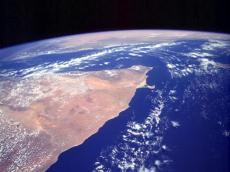
After celebrating the New Year and the entry of also Romania and Bulgaria into the European Union, it is the crisis in Somalia that is at the top of the foreign policy agenda.

On Wednesday I'm heading to Brussels for a meeting of the European members of the International Contact Group on Somalia.

It's a meeting that is the result of talks during the last week between European Commissioner Michel, Foreign Minister Steinmeier of Germany and myself, and we will all of course be there.

The aim is to coordinate the European approach to the crisis in Somalia. In the days to follow there will then be more broadly based meetings primarily in Nairobi on the concrete steps to be taken. That will be an opportunity to coordinate more closely also to the United States.

With the immediate phase of military operations inside Somalia now ended, there is a need to move forward with a political dialogue aimed at the setting up of a government that is seen as representative by all of the country. Although the representatives of the present Transitional Federal Government have now been in Moghadishu or its environs, it seems obvious that there will have to be a more broadly based solution.

The risks of the country falling further down into chaos are very real. A return to the rule of the competing warlords must be avoided. This both in order to reduce the suffering of the ordinary people and to prevent the country being a safe haven for terrorists of different sorts.

I fail to see that the Ethiopian troops that have now entered in large numbers can remain for long. They risk being seen as a force of occupation, and then provoke more of violence and conflict. It is not a coincidence that the UN Security Council has said that neighbours should have no military role in bringing stability to the country.

Whether there would be the need for some sort of international stability force remains to be seen. Uganda is said to have offered troops, but that is unlikely to be enough. But clear is that there has to be a broadly based political agreement before there is any stability force.

And then there will of course be the need for both immediate humanitarian and more long-term state-building aid efforts. Here it is to be expected that the countries and institutions of the European Union will be the main actors.

All of this will be on the agenda in Brussels on Wednesday.

I'm coming there from Stockholm, and Gunnilla Carlsson - Minister for Development Assistance - is joining me from Washington where she has been attending the state funeral for former President Ford.

And I also expect the Foreign Minister of Norway Jonas Störe to ge there. Not the European Union - but still Europe.

Sunday, December 31, 2006

New Policy for a New Era?

For those interested in my approach to the challenges we are facing in the world today, it might be interesting to read the speech I gave to the Swedish Institute for International Affairs on December 19th.

The text can be found on the Ministry website on my own old one and on the site of the Institute.

Those interested can there also access the video version of the event.

The speech has been fairly widely commented upon in Sweden, although mostly in general appreciative terms without going too much into the substance.

But it does set out both my vision and my priorities. It combines optimism about the possibilities of globalisation with pessimism concerning the dark clouds gathering on the more immediate horizons of the neighbourhood of Europe.

Saturday, December 30, 2006

The Future of This Blog?

As has been noted, this blog has gone inactive since I was asked to serve as Foreign Minister of Sweden in early October.

It is not easy to combine blogging with having an official position. Your worlds are scrutinzed in a somewhat different way - as indeed they should be.

It's really the difference between being an observer of politics and an active participant in some of the same events. And the two roles are very different, with blogging fitting better with the first than with the second of these two functions.

Nevertheless, the web is an important tool also of the increasingly important public diplomacy.

The Ministry for Foreign Affairs does maintain it's somewhat dull site in Swedish as well as another one in English, although I have to admit that they don't really meet the standards that must be achieved these days. Work is underway to improve them, although government bureucracies don't really operate with the speed of the light.

To which extent I will have the possibility of continuing to post on this or another blog now and then remains to be seen, but since I noted that there are hundreds of visitors each day in spite of the blog being virtually "dead" since months back I just wanted to note the state of affairs.

We'll see.

A new year might bring new opportunities also in this respect.

Wednesday, December 27, 2006

Assad’s Olive Branch Can Bear No Fruit!


Ammar Abdulhamid Fri. Dec 29, 2006
Forward Forum

According to an article in Time magazine this month, I am the central figure in some cockamamie plot to overthrow the Syrian government. The plan, apparently, is to undermine Bashar al-Assad’s regime through the ballot box, starting with the parliamentary elections scheduled for March 2007.

But as every Syrian knows, these elections tend to be quite staged and inconsequential. Perhaps the American officials who concocted the classified plan for regime change believed they could make it appear more credible by assigning a primary role to a dissident like myself. No one, however, could exude the kind of aura needed to cover the naiveté of the proposed scheme.

If nothing else, this half-baked plot exposes how much the United States is struggling to develop a coherent policy toward Syria. Washington is clearly unable to grasp the reality on the ground, both in Syria and across the Middle East — and nowhere is this disconnect more visible than in the naive insistence, by the Iraq Study Group and others, on linking progress in Iraq to the revival of Syrian-Israeli peace talks.

If Israel returns the Golan Heights to Syria, the advocates of this line argue, the Assad regime will become more agreeable to helping the United States in Iraq and to reining in Hezbollah and Hamas. But little consideration is given, at least officially, to the fact that Assad may not be in a position to help achieve any of these things once the United Nations’ investigation into the assassination of former Lebanese prime minister Rafik al-Hariri is completed.

This open secret has led many to believe — with ample justification — that despite the Iraq Study Group’s emphasis on obliging Damascus to abide by all relevant U.N. resolutions, the Assad regime will ultimately be rewarded with a free pass on the Hariri assassination. Indeed, there is an implicit acknowledgement among all advocates of talks with Assad that the regime’s real interest lies more in killing the Hariri investigation than in retrieving the Golan. But since this matter cannot be acknowledged publicly by either Damascus or Washington, returning the Golan is made out to be a key to solving the region’s problems.

Why, some might ask, should Israel care about all this, if in the end it gets something out of the deal — such as the containment of Hezbollah and Hamas?

For one, it is not really clear that Damascus actually can deliver in this regard, seeing that the real financial backer here is Iran. So, unless the Assad regime suddenly becomes willing to turn against Iran, it is unlikely to cause a serious break in the flow of arms and funds to Lebanon and Gaza.

No matter how desirable this turnaround might seem in the eyes of American and Israeli policy-makers, it remains an unlikely course of action for Assad. The alliance between the two regimes dates back to the early days of the Iranian revolution, and the security and economic dimensions of the relationship have been developed for years.

Iran invests hundreds of millions of dollars in Syria, and annual bilateral trade tops a billion dollars. More importantly, Iranians have been able to heavily infiltrate the Syrian security apparatuses, to the point where Tehran has the ability to manipulate existing differences among different members of the Assad family. Today, Iran is both a security threat and a lucrative business partner to the Syrian regime — and both sides are well aware of it.

The fact that Iran has so much influence on the Assad regime likely means that Iranian concerns would filter into talks between Israel and Syria. Considering the nature of relations among Iran, Israel and the United States at the moment, it is not at all clear that diplomacy with Damascus would be productive.

And that’s not all that could hamper Damascus’s ability to achieve peace. There is the Assad regime’s growing nationalistic jingoism, as well as the fact that the ruling Alawites represent less than 10% of Syria’s population. And, of course, there’s the ongoing Hariri investigation.

This might mean that even if Damascus does agree to sit at the negotiating table — which itself is far from a given — discussions could drag on due to the Assad regime’s inability to commit to specific concessions. Any concession to Israel, or to the United States, would likely be held against the regime by its domestic critics, meaning that Assad would be hard pressed to settle for anything less than a perfect deal.

Indeed, it was just such an impossible quest that made then-president Hafez al-Assad — who was a far more credible and pragmatic leader than his son — walk out on talks with President Clinton in 2000. How reasonable, then, would it be to expect that the embattled Bashar Assad will accept what his respected and feared father could not? One need only look at how the younger Assad has tried to appropriate Hezbollah’s perceived victory in Lebanon to grasp that at this stage, he is more interested in burnishing his militant credentials than his diplomatic ones.

Yet even if Assad were to sign a peace treaty with Israel — which, again, seems rather hard to imagine at the moment — such a deal would almost certainly be viewed as tainted by most Syrians. Any concessions made to the Jewish state would be portrayed by critics of the regime as Assad preserving his power at the expense of the national interest.

What exactly this would mean for the future of Syria is hard to say, but one can get a pretty good idea by looking next door, in Iraq and in Lebanon. With communal lines being drawn ever darker, the minority Alawites’ rule in Syria is far from guaranteed.

As such, peace with Assad may not necessarily mean peace with Syria. Indeed, a peace treaty might not even outlive the regime. So unless Israel, the United States and the international community are willing to assume the role of protector, it is unlikely that peace with an Assad-ruled Syria will prove enduring. Syria cannot make peace with anybody, least of all Israel, until it first makes peace with itself.


Ammar Abdulhamid, a Syrian blogger and author, was forced into exile in 2005 for criticism of the Assad regime. He is founder of the Tharwa Foundation, an independent initiative focusing on diversity issues in the Middle East, and is a nonresident fellow at the Brookings Institution’s Saban Center for Middle East Policy.

Monday, December 25, 2006

Is Dialogue with Iran and Syria Worth It?


Ammar Abdulhamid
(Spanish, Russian, French, German, Czech, Chinese, Arabic)

Despite frequent claims to the contrary, the fundamental problem in the Middle East is not intervention by the West. On the contrary, the real problem is that, for all their dabbling, the Western powers seem capable of neither war nor dialogue. This leaves everyone in the region at the mercy of the Middle East’s oppressive regimes and proliferating terrorists.

Advocates of the Iraq war lacked an understanding of the complexities on the ground to wage an effective war of liberation and democratization. As a result, their policies merely ended up eliminating Iran’s two major regional rivals: the Taliban and Saddam Hussein’s regime. This presented Iran with a golden opportunity to project itself as a regional hegemon, and Iran’s leaders are unlikely to let this opportunity slip away.

Advocates of dialogue with the Iranians and their Syrian allies, like former United States Secretary of State James Baker, labor under the delusion that they can actually reach an understanding that can enable a graceful US exit from Iraq and help stabilize that wounded country. The delusion is based on two false assumptions: that the Iranians and the Syrians can succeed in Iraq where the US has failed, and that the international community can afford to pay the price of ensuring their cooperation.

True, Syria and Iran are playing a major role in supporting Iraqi insurgents, and Syria is still encouraging the trafficking of jihadists and weapons across its borders with Iraq. But the idea that these activities can be halted at will is naïve.

For one thing, the interests of the Shia communities in Iraq and Iran are not the same. Iraqi Shia have never accepted Iranian dictates, and many took part in Saddam’s war against Iran in the 1980’s. After all, the Iraqi Shia are Arabs, and if they are now willing to coordinate their activities with their Persian counterparts, their main goal will always be to secure an independent course as soon as possible, even while they carry on with their internecine disputes within Iraq. Iran is in no better position than the US to convince them to resolve their differences.

President Basher al-Assad of Syria faces a similar dilemma. Although he has opened Syria’s border to jihadists and has allowed Saddam’s supporters to operate freely there, that choice may not be entirely his. Syria’s aid to Saddam in maneuvering around the United Nations’ oil-for food program brought Iraqi money to inhabitants of the border region, who have always been closer in customs, dialect, and outlook to their Iraqi neighbors than to their fellow Syrians. In the absence of government investment, local inhabitants’ loyalty went to Iraqi Baathists who helped improve their lot. Indeed, even local security apparatuses have been unwilling to comply with dictates from Assad and his clique to seal the borders.

In these cirumstances, neither Syria nor Iran seems capable of delivering anything but mayhem in Iraq. What, then, would the proposed dialogue between the US and these states achieve other than continue to empower their corrupt yet ambitious regimes?

The story gets more complicated when one considers the UN inquiry into the assassination of former Lebanese Prime Minister Rafiq al-Hariri. Assad wants nothing more than to see this affair forgotten – and the proponents of dialogue think that they can give him what he wants in the hope of breaking Syria’s alliance with Iran.

But that is merely another erroneous (not to mention amoral) assumption. The alliance between Syria and Iran dates back more than two decades, and was explicitly reaffirmed by the two ruling regimes as recently as January 2005. Indeed, the two regimes are now joined at the hip. Assad’s recent refusal to attend a summit in Tehran with his Iranian and Iraqi counterparts was a mere tactical move designed to appeal to the proponents of dialogue.

In fact, Iran has invested hundreds of millions of dollars in Syria, and annual bilateral trade tops a billion dollars. Irani’s growing influence over the Syrian security apparatus is well established, and Iran is funding an effort to create Syrian Shia militias to compensate for Assad’s sagging support in the army and in the minority Alawite community.

Assad cannot turn his back on all of this. No deal would be sweet enough, even if it included the return of the Golan Heights. For Assad and his supporters, survival is more important than sovereignty.

Still, to read the well-known names of commentators and policymakers who are recommending engaging Syria and/or Iran is a testament to how inconsequential and cut off the Western powers have become from the realities on the ground in the world’s most turbulent region. That, it seems, is the price of their arrogance.


Ammar Abdulhamid is a Syrian author, blogger and dissident. He runs the Tharwa Foundation, an independent initiative that focuses on diversity issues in the region.

Copyright: Project Syndicate, 2006.

Friday, December 22, 2006

The Rhoids!


So here I was crouching head-down on my belly in the Doctor’s chair, my ass hoisted in the air in a very un-reassuring position for a shy reclusive and heretical buttocks, when it suddenly hit me, no, not the intrusive instruments of the doctors perianal conspiracy, but the sudden realization that the problems with my ass, if memory served me correctly, seem to have come about around the same time as my problems with my Assads, which, indeed, made perfect sense to me, seeing that all involved are indeed full of shit.

But then my realization went deeper than that when I remembered that I can actually date my first serious bout of hemorrhoidal pain and bleeding back to the early days of the US-led invasion of Iraq. I, then, had a series of “dry runs” coinciding nicely with my first stint at Brookings in mid 2004. But, and beginning in mid January 20005, things went down hill and colon upon my return to Damascus, with the onset of that long period of incessant interrogations by Syria’s various security apparatuses, and my incessant defiance thereof. Consequently, a surgery became necessary in April - the bleeding stopped - a death-threat inevitable in June -the throbbing pain came back - and exile a relief in September - the bleeding of anus and soul returned, and never looked back.

My bleeding is but a reflection of the turbulence around and within me, my anus a barometer. This world is going indeed to shit, and, if some had their way, so will my life.

The latest ramification of the Time’s article is the embellishment in an Arabic site run by another troubled Syrian soul in exile, a journalist and a graduate of the Syrian prison system who have developed his own unique way of coping with his own growing disillusionment with the Syrian regime and his own messianic predilections, Nizat Nayouf. His way allows him to quote “widely knowledgeable sources” in Syria, while maintaining a semblance of objectivity and stating that their claims "are rather difficult to verify." indeed. The “widely knowledgeable sources” in Syria claim that I am a triple agent of sorts playing all sides, including the US Administration, the regime and the NSF, and that I have secretly recorded NSF meetings, and sent the recordings to the Presidential Palace in my Damascus, through my mother, the well-known actress Muna Wasssef who, naturally, is very "close to the Palace."

The source also identifies the Tharwa Project as the vehicle of the US conspiracy, albeit it admits that our funding initially came from a Dutch organization connected, according to "widely knowledgeable sources" in the Netherlands this time around, to the Protestant-Jewish lobby.

In fact, however, I never attended any of the NSF meetings, because, here I am the center of a CIA covert plot to bring down the Syrian regime and no one has seen fit so far to speed up the approval of my asylum application and give me a goddamn passport. I took part in establishing the NSF virtually, I have never yet met Khaddam or Bayanouni, and other than the US-based members of the NSF, I only met those who came here for occasional visits. Now, I should think that that would make it pretty hard for me to get any recordings of NSF meetings, unless, of course, I had accomplices. This is what the new version of the report will likely claim in some future date.

As for my Dutch donors, well, actually, they happen to be a branch of an international Catholic organization, namely the well-known Pax Christi, known for its peacebuilding and humanitarian activities all through the world, even here in the good old USA.

Conclusions:

* The widely knowledgeable sources remain the bane of our existence in this world. They fuck up war. They fuck up peace. They fuck up objectivity. When they are real, that is. More often, however, they are nothing more than tattered disguises for our growing sense of insecurity and paranoia.


* We all live under the delusion of being right and good most if not all of the time. And though I tend to question myself often with regard to my basic motives, intentions and means, I cannot claim to be any less susceptible to this tendency than any given one of us. For this reason, I have no option but to muddle through the dark days and ways that lie in front of me, stumbling from one sudden realization to another until I make some sense of it all, or someone makes some sense of me.

Ouch Doc, yeah, that really does hurt.

Wednesday, December 20, 2006

A Heretic in the Wind!


A recent article in the Time paints me as the central figure of some cockamamie covert plot to overthrow the Syrian regime. But, and while I'd really like to see our illustrious regime overthrown and reconciled to the dustbin of history (to borrow a term that is so dear to the hearts of regime spokesmen), news of my involvement in such “sinister” plot come as news to me as well. I was never aware of that fact that I was that creative. I think I should take up writing again, soon.

Meanwhile, I am, at this stage, a member of the board of the Tharwa Foundation USA, which was recently incorporated in Washington to conduct human rights and democracy activities along lines similar to our Tharwa Project in Syria with its focus on diversity issues. Tharwa Foundation USA will be the recipient of funds from a variety of donor organizations in the US, but nothing that directly comes from the US government (where our donors get their money, however, is their problem). Moreover, the Tharwa Foundation will not be carrying out any partisan activities, such as supporting any particular political candidate, party, or movement inside or outside Syria, or anywhere in the region (we have representatives in Lebanon, Egypt, Iraq, Palestine, Morocco and the Gulf).

Besides, parliamentary elections in Syria are too farcical and tightly controlled to become the center of any meaningful opposition work or action. For them to be put at the center of a plot to overthrow the Syrian regime is ludicrous. If there is someone who thinks along these lines in the administration, then heaven help us.

My affiliation with the National Salvation Front has nothing to do with Tharwa, especially the branch in Syria, where the Tharwa team has always been critical of this recent aspect of my activism, albeit they accept my freedom to make my choices in these matters just as I accept theirs.

Indeed, Tharwa came to light in Syria in early 2003, following 2 years of preparation. The NSF, on the other hand, was established in Europe in March 2006. Tharwa emerged as a regional civic project that support dissident views, and is often run by dissidents. Still, it has no partisan affiliation with any existing political group inside or outside the country, and does not represent itself as a political operation anywhere. In fact, its members come from a variety of political backgrounds, not to mention ethnic and religious affiliations.

The Time story, therefore, is definitely not well-researched and tends to read too much into too little and stitches together disconnected pieces of a nonexistent puzzle. The current administration has not yet formed a coherent policy vis-à-vis Syria, albeit they are opening up more and more to the Syrian opposition, the NSF in particular. But that only means that we have been talking more often, nothing concrete has so far come out of the talks except for a general agreement that the NSF is an important and credible opposition movement whose views and basic expectations warrant to be factored in whatever policy that the Administration ends up adopting with regard to Syria. NSF members in Europe are conducting similar activities there as well with their local governments. Indeed, the NSF recently opened an office in London.

Still, I don't really mind in principle being the central figure of a rumored covert operation, provided it is substantive and real. This one is just too bloody farcical, and I would like to believe that I am smarter than to be involved in something like this. I was exiled from Syria less than 15 months ago – not enough time in this day and age for one to lose his grip on the realities he left behind.

Everybody in Syria knows of the staged nature of the parliamentary elections there, exposing this fact to an external audience is important, of course, and it should be done, and it will be done I know, with or without overt or covert US support, but the results of this activity will not have a major impact, if any, on the standing of the Assad regime vis-à-vis the Syrian population, who have long grown accustomed to this periodic song-and-dance.

Nevertheless, should the Time story cause someone in Syria to worry, for whatever reason, then, it is good. But if it made them laugh it is even better. For I noticed that the Assads are at their worst when they are confident and joyful, so they might as well dance naked around the campfire, as far as I am concerned (I wouldn't mind doing that myself actually. It's been a while).

As for the opposition, well, we have to admit that we are still relatively weak with limited grassroots appeal. But our weakness is more than compensated by the moronic policies of the Assads, not to mention their avarice, this is indeed what keeps us in the game, and this is the one constant that has been working for us all along, albeit we cannot keep on
counting on it
. Indeed, I believe that the NSF is slowly moving beyond that, which is why it finds itself so much in the news lately. But then, we have legitimate complaints vis-à-vis the Assads regime and our point of view merits an audience and merits support. Ignoring us and legitimizing the tyrannical and corrupt rule of the Assads is not realism, it is downright duplicitous and as equally moronic as the policies adopted by the Assads themselves.

But then, there are indeed plenty of morons all around. Some believe in farcical engagement justified on the basis of real politick, others in no less farcical warfare advocated on the basis of certain undying messianic expectations. Then there are opportunist morons who wouldn't mind scavenging around for a tasty morsel, and idealistic morons who think that they have to find a way to chart a path around all those moronic policies out there in an effort to salvage what can still be salvaged from the impending wreckage by way of mitigating the overall disaster and in the name of some ideal that keeps on militating within their souls.

I like to believe that I belong to that last category of morons. But there are those who will feel more comfortable putting me in the former. Be that as it may, I am only 40 years old, and I am going to be around for a while through the thick and thin of it, and if people can't see things my way today, perhaps, in a few years time, I will have created the sort of reality on the ground that can lend more credibility to what I and my dissident colleagues stand for.

On the other hand, stories like this, coming at a time like this, yearend and all, cannot but make me look back at the last few months of my fledgling political career, and yearn, really yearn, for early retirement. I enjoyed life more when I was just a heretical poet and author waiting for one or two of my misguided colleagues from the Time of Ignorance of yore, who, still high on atavistic religiosity rather than joi de vivre, would come and kill me while I lounged by the Sheraton poolside in Damascus with my equally heretical wife, kids and mother sipping on that odd mixture of lemon and beer that we are all so fond of in the family, and the country.

Oh well, I have to stop daydreaming I guess, there is some covert scheming waiting to be done back in the office.

Cheerio.

***

More on this story with a quote by me here. And this is an article that I recently wrote and which is being widely syndicated in a number of languages.

Monday, December 18, 2006

The Flipping Moment!


Indeed, the Assads of Syria are currently being wooed by one and all, American Senators, European officials, and Arab leaders, but soon, I'd wager, everybody will be wowed by how little the Assads actually have to offer and by how bent they are on overplaying their hand, just as they have done on so many occasions over the last few years.

The Assads don’t have it in themselves to “flip” really. Flipping requires a certain family consensus that in light of existing family dynamics is very hard to reach. The interests of different family members still diverge along personality lines, individual ambitions and business interests. A suitable new arrangement or accommodation has not been reached yet, and will not likely be reached anytime soon, if ever.

Meanwhile, the current consensus on the necessity and usefulness of the alliance with Iran and Hezbollah was reached by default – the alliance has been a hallmark of Syrian foreign policy for decades now. Different family members simply lapsed on established positions and policies and stuck to their guns. The fact that events seemed to have justified this choice of theirs will argue in their individual minds that sticking to these policies is the best thing to do at this stage. So, they will do nothing but grandstand and will continue to do nothing but grandstand as the flipping moment fades away over the horizon.

This is why President Bashar told his Italian interviewer recently that, although Syria can do a lot to help the US in Iraq, considering that the Assads have such “excellent relations” with so many of the actors involved in the Iraqi scene, the US should also “talk to Iran.”


Meanwhile, those who think that they can talk some sense into the Assads should learn from the experience of Senator Bill Nelson, who was vilified in official Syrian press for claiming after the end of his visit to Syria that he had had a sharp exchange of views over Lebanon with the Syrian President, an assertion that has nothing to do with the rules of "politics, diplomacy and morality," according to the Syrian daily, Tishreen, that went on to list Nelson among those "two-faced" US officials who pay visits to Syria for purposes related to partisan politics in the US. Well, perhaps they got that last point right. Baathists are not all and always as dumb as we think. So, unless one is willing to grovel at the feet of the mighty Assads of the Middle Eastern jungle, perhaps there is no point in talking to them at all.

Indeed, the Assads will overplay their hand. We can always count on them doing just that when things seem to be going their way, even with Iranian coaching. It's a habit. It's well-nigh genetic.